
Real Coaster: Idle Tycoon
Raventurn GamesSimulation
4.84.05K Reviews
- Version
- 2.0.25
- Installs
- 10.00M
- Age Rating
- Everyone
Screenshots
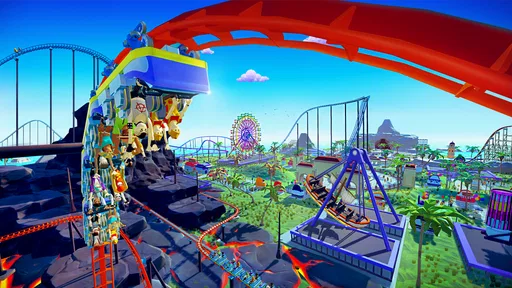
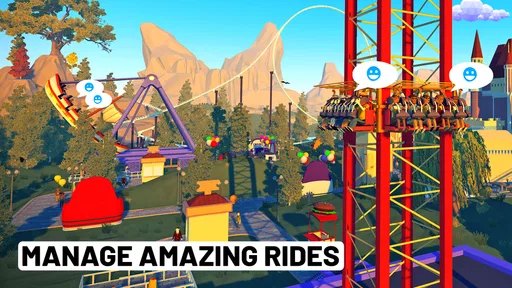
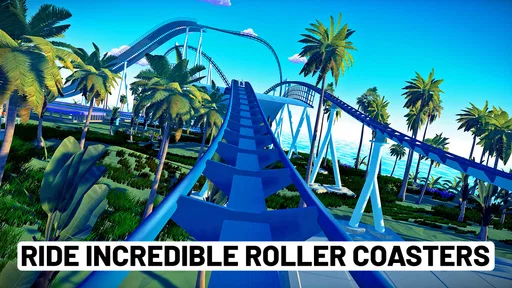
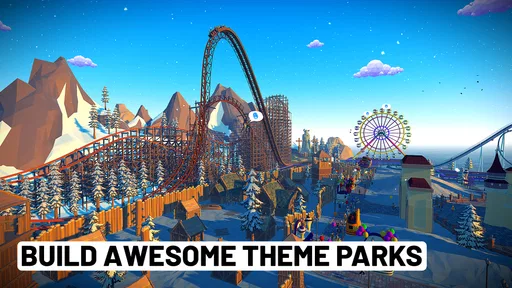
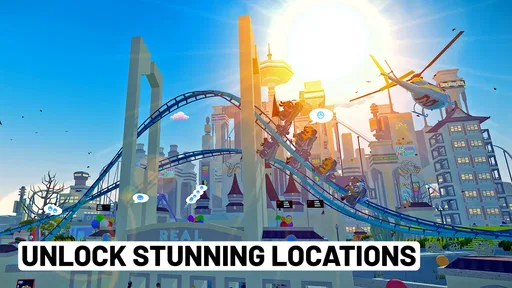
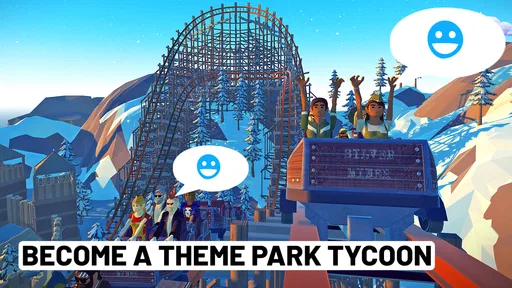
Our Review of Real Coaster: Idle Tycoon
 Analysis by Appyee
I spent time with Real Coaster: Idle Tycoon as a relaxed theme-park simulation, and my first impression was that it understands the appeal of building something entertaining without demanding constant attention. The basic fantasy is easy to grasp: develop a park, add roller-coaster attractions, improve the experience, and let the operation continue while I am away. That makes it approachable, but the better question is whether the idle format leaves enough meaningful choices to keep the park interesting after the first burst of progress.
In my experience, the answer is yes, provided you enjoy gradual management more than hands-on construction. This is a free simulation game from Raventurn Games, rated for Everyone, and it has already attracted over ten million installs. Its average rating sits at 4.8 from around 114 thousand ratings, which matches the immediate appeal I felt: it is colorful, readable, and easy to understand within a short session. Still, its strongest audience is not someone looking for a detailed engineering sandbox. It is better suited to players who like making a series of small economic decisions and watching those decisions compound.
Where the interesting decisions begin
The most important choice is not simply whether to build another attraction. It is deciding where the next improvement will have the greatest effect on the whole park. In an idle game, resources are always asking to be spent immediately, yet an attractive upgrade is not automatically the best upgrade. I found myself weighing faster short-term progress against a stronger foundation for the next stretch of play.
That creates a useful planning rhythm. I could make a quick improvement before closing the game, then return later to see whether the park had generated enough momentum for a larger step. The game works best when I treated each visit as a brief management meeting rather than a long construction session. I checked what had accumulated, chose one priority, and left the park to work again.
A practical habit is to avoid spreading every reward across several modest improvements. Concentrating spending on the change that supports the current bottleneck usually feels more satisfying than making the park look slightly better everywhere. If progress feels slow, I would first ask whether the problem is earning capacity, attraction development, or the cost of the next meaningful milestone. That simple diagnosis prevents aimless tapping.
The coaster theme also gives the decisions a clearer identity than a generic money-making simulator. I was not merely expanding an abstract business; I was shaping a place built around rides and visitor appeal. That focus helps the game feel coherent, even when the underlying loop is deliberately simple. Players who enjoy seeing a park gradually become more impressive will get more emotional satisfaction from each upgrade than someone interested only in maximizing a numerical output.
There is also a difference between playing for appearance and playing for efficiency. If I wanted a pleasing-looking park, I could prioritize the attraction that felt most exciting in the moment. If I wanted the quickest economic improvement, I had to be more patient and consider what would help future spending. The game does not need complicated spreadsheets to create this tension; the limited attention of an idle session does much of the work.
How I approach a short session
My preferred routine is simple. I open the game, collect what has accumulated, inspect the available improvements, and choose one objective instead of buying everything that flashes for attention. I then leave it running in the background of my broader day and return when I have a reason to make another decision. This makes it a good companion for a commute break, a few minutes after lunch, or the quiet moment before bed.
That routine also reveals one of the game's limitations. If I want constant interaction, it can feel too restrained. The pleasure comes from choosing well and waiting, not from controlling every movement inside the park. Someone expecting a full construction simulator with detailed layouts, staff management, or continuous operational problems may find the experience lighter than expected.
I also recommend setting a personal goal for each visit. “Improve the park” is too vague, while “save for the next substantial ride improvement” gives the session direction. This is one of the less obvious ways to make an idle game feel strategic: the player supplies the planning horizon. Without that discipline, it is easy to spend resources simply because they are available.
Risk, reward, and the cost of impatience
The reward structure is built around anticipation. I make a choice, wait for the park to produce more value, and return with a larger budget or a clearer next step. That waiting period can feel rewarding because it gives even a small upgrade a sense of consequence. It also means that poor spending is more noticeable than it would be in a fast arcade game.
Impatience is the main risk. When progress slows, the tempting response is to look for an immediate shortcut or spend before I have identified the real obstacle. Sometimes that is reasonable, especially if I am ending a session and want a visible change. Other times it only moves the problem a little further away. The game is most enjoyable when I accept that not every visit needs to produce a dramatic transformation.
Because the game is free, the presence of in-app purchases ranging from $0.99 to $99.99 per item is important to understand before playing. I would approach those options as convenience spending rather than as a requirement for discovering the core loop. Players who dislike any pressure to accelerate progress should be cautious, particularly if they are prone to making small purchases repeatedly. The sensible approach is to decide in advance whether the free pace is acceptable and keep that boundary clear.
This is also where the game differs from a traditional paid simulation. A paid game often asks for patience in exchange for a fixed experience, while a free idle title has a stronger reason to make acceleration visible. I did not see that as a reason to dismiss the game, but it changed how I evaluated progress. I focused on whether the normal loop remained enjoyable without treating every delay as a problem that needed money to solve.
For younger players, the Everyone rating makes the theme broadly accessible, but adults should still be aware of the purchase structure when sharing a device. The colorful presentation and uncomplicated premise make it easy to hand to a child, yet purchase awareness matters more than the age rating alone. I would keep spending decisions under adult control and explain that waiting is part of the game rather than a failure.
When a shortcut helps and when it does not
A shortcut can make sense when I have already made a clear plan and want to finish a specific upgrade during a limited play window. It makes less sense when I am buying simply because the next improvement feels distant. The difference is whether the purchase supports a decision or replaces one. If I have not worked out what the extra progress is meant to accomplish, acceleration rarely improves the experience for long.
Another useful trade-off is attention. The game asks for less time than a conventional tycoon, but that convenience means I surrender some control. I cannot expect the same satisfaction as a detailed management game if I only want to check in occasionally. Conversely, if I have a busy schedule and still want a park-building theme, the reduced workload is a genuine advantage rather than a weakness.
Adapting the plan instead of repeating the same move
The park's progress encouraged me to adjust priorities instead of following one rigid upgrade order. A plan that worked during the opening phase was not automatically the right plan later. Early on, I cared about creating momentum. Once the park had a stronger base, I became more selective and waited for improvements that could support the next stage rather than merely making the current screen look busier.
This is where the idle format can be misunderstood. It is not completely passive; it is intermittent. The game gives me time between decisions, and that time is useful for reconsidering the plan. If I return and discover that my previous purchase did not change the pace as much as expected, I can stop repeating it and redirect the next batch of resources. That small feedback loop is more important than constant activity.
I found it helpful to compare the result of an upgrade with the reason I bought it. Did it make the next objective feel closer? Did it improve the park's overall momentum, or did it only provide a temporary sense of completion? Keeping that distinction in mind makes the game less about collecting upgrades and more about learning which choices have lasting value.
A realistic everyday example is a player with ten minutes in the morning and another ten minutes at night. In the morning, I would collect progress and choose a target that can develop while I work. At night, I would review whether the target still makes sense, spend only if the next step is worthwhile, and leave the game prepared for the following day. That pattern suits the game's scale much better than trying to force a long uninterrupted session.
Adaptation also matters for players who enjoy visual variety. There is a temptation to choose whatever looks most exciting, but a park can feel more rewarding when visual choices follow an economic plan. I would alternate between improving the park's earning potential and choosing a change that makes the destination feel more complete. That balance prevents the experience from becoming either a dry optimization exercise or a string of disconnected purchases.
Who should choose another kind of game
I would not recommend this as a first choice for someone who wants detailed track design, realistic engineering constraints, or direct control over every visitor. The game's appeal is the broad management loop around a coaster park, not the precision of a construction toolkit. A more traditional theme-park simulator will be a better fit if the main pleasure comes from drawing complex routes, solving crowd-flow problems, or managing a large staff system.
I would also suggest looking elsewhere if you need a story-driven campaign or a strong competitive layer. My enjoyment came from personal progress and gradual improvement, not from comparing a park with other players or following a dramatic narrative. On the other hand, fans of idle games who want a more distinctive setting than a generic factory or shop may find the coaster theme refreshing.
Why the game holds attention over time
The long-term appeal depends on whether gradual progress feels meaningful to you. The game does not rely on one spectacular moment; it builds satisfaction through accumulation. A park that seemed modest at the beginning can feel more purposeful after several rounds of deliberate investment, and that change is the main reason to keep returning.
Version 1.0.803 is the current version, and the game supports devices running Android 6.0 or later. That makes it accessible to many Android users, including people who are not carrying a recent phone. Even so, I would still judge the experience by how comfortably it fits into your daily routine. Technical accessibility does not change the fact that the design is aimed at relaxed, repeated check-ins.
The developer, Raventurn Games, has chosen a focused concept rather than trying to turn the title into every kind of management game at once. That focus is valuable. The coaster identity gives the upgrades a recognizable purpose, while the idle structure keeps the controls approachable. The trade-off is that depth comes from planning the order and timing of improvements, not from a wide collection of complex systems.
One of my more useful discoveries was that patience itself becomes a planning tool. I could stop treating offline progress as dead time and instead use it to prepare the next decision. Before leaving, I chose a sensible target; after returning, I assessed the result. This creates a two-stage workflow that feels more thoughtful than simply opening the game whenever I remember it.
There is a ceiling to that depth. Once the novelty of expanding the park settles, players who need constant new mechanics may feel the routine becoming familiar. The game is strongest when I want a dependable, low-pressure project rather than an endlessly changing challenge. Its popularity suggests that this rhythm works for many people, but a high rating does not make the design universal.
The free entry point is another reason it is easy to test. I can begin without paying, learn whether the idle pace suits me, and decide later whether optional spending has any value for my habits. If I enjoy checking in casually, the free structure may be enough. If I find myself frustrated by waiting, I should first ask whether I actually like the core loop before considering a purchase.
A practical way to judge your first week
I would evaluate the game by three questions. Do I look forward to choosing the next improvement? Do I enjoy returning to see what accumulated? And can I accept that some progress will happen while I am doing something else? If the answer is yes to all three, the game has probably found the right balance for me. If I only enjoy the first few upgrades and dislike the waiting, its long-term design may not match my preferences.
I would also avoid judging it by a single long session. The game is designed around repeated visits, so playing continuously can make the loop feel thinner than it does across a day. Its natural pace is closer to maintaining a small project than completing a conventional level. That distinction helps set realistic expectations from the start.
My strategy verdict
After spending time with it, I see Real Coaster: Idle Tycoon as a friendly simulation for players who like theme parks, incremental progress, and decisions that remain understandable without becoming overwhelming. I enjoyed the need to choose a priority, wait for the park to develop, and adjust the plan when the next stage demanded something different. The coaster setting gives the idle formula more personality than a purely abstract business game.
Its limitations are equally clear. It will not replace a detailed park-building simulator, and its relaxed pace can feel too slow for anyone who wants constant control. The optional purchase range also means I would play with a firm spending limit, especially on a shared device. Those are not minor details; they define who will enjoy the game and who will quickly become impatient.
For me, the best way to play is to treat each visit as a planning checkpoint. I collect progress, identify the current bottleneck, save toward one meaningful improvement, and resist spending merely to remove a short wait. That approach makes the park feel like a project with direction rather than a screen full of buttons asking for attention.
As a free game rated for Everyone, it is easy to try, and its strong reception is understandable. I would recommend it to a friend who wants a light management game for short daily sessions and likes the idea of gradually developing a coaster-centered destination. I would skip it in favor of a deeper alternative if the real goal is architectural freedom, detailed operations, or intense competition. For the right player, though, its calm rhythm and clear trade-offs make it a pleasant way to build a park one considered decision at a time.
Privacy and Permissions
See what permissions an app requests and how it handles your data.
- Wi-Fi connection information
- view Wi-Fi connections
- Other
- view network connections, full network access, control vibration, prevent device from sleeping, Google Play license check
Verdict
Strengths of Real Coaster: Idle Tycoon
- Simple controls make it easy to manage your park on mobile.
- Idle earnings let the park progress even when you are offline.
- Multiple attractions provide variety beyond the main roller coaster.
- Short play sessions fit well into quick breaks or commutes.
- Upgrades create a steady sense of progression for casual players.
Limitations of Real Coaster: Idle Tycoon
- Progress can feel slow without watching ads or spending premium currency.
- The gameplay loop may become repetitive after extended play sessions.
- Limited strategic depth may disappoint experienced tycoon game fans.
- Frequent ad offers can interrupt the otherwise relaxed experience.
- Some upgrades require considerable waiting as the park expands.
Similar Picks in This Category
View All
Truckers of Europe 3
Wanda Software4.3

Town Building Life Simulator
XGame Global4.2

Fidget Toys Trading・Pop It 3D
Freeplay Inc4.7

Sculpt People
CrazyLabs LTD4.4

Scary Teacher 3D
Z & K Games4.2

Hair Tattoo: Barber Shop Game
CASUAL AZUR GAMES4.3
Frequently Asked Questions
What is Real Coaster: Idle Tycoon?
Real Coaster: Idle Tycoon is a casual amusement-park management game centered on building and expanding your own theme park. You can construct roller coasters and other attractions, improve facilities, attract visitors, and earn money while you are actively playing or away from the game. Its idle mechanics make it suitable for short sessions, although progression also involves repeated upgrades and resource management.
How does progression work in Real Coaster: Idle Tycoon?
Progression is based on reinvesting the income generated by your park. Players typically unlock new rides or areas, upgrade attractions, improve visitor capacity, and increase earnings through better management. The game combines tap-and-upgrade decisions with automated income, so you do not need to control every visitor or ride manually. Strategic spending is useful because some upgrades provide faster returns than others.
Can I play Real Coaster: Idle Tycoon offline?
The game may allow some basic management and idle progression without a continuous internet connection, but online access can be required for advertisements, special rewards, cloud features, updates, or certain events. Offline behavior may also vary between Android and iOS versions. If you want to preserve progress reliably, it is best to reconnect regularly and use any available account or cloud-saving option.
Is Real Coaster: Idle Tycoon free to download and play?
Real Coaster: Idle Tycoon is generally offered as a free download, but it may include optional in-app purchases and advertising. Purchases can provide premium currency, boosts, or convenience items, while rewarded ads may offer additional income or temporary bonuses. You can usually progress without paying, although free players may experience slower advancement and more frequent prompts to watch advertisements.
Is Real Coaster: Idle Tycoon suitable for children?
The game is easy to understand and does not require advanced gaming skills, making its amusement-park theme appealing to younger players. However, parents should review the age rating, advertising content, privacy information, and in-app purchase settings before allowing children to play. Because the game uses upgrade loops, rewards, and optional purchases, parental controls are recommended on both Android and iOS devices.
Play our best games!


